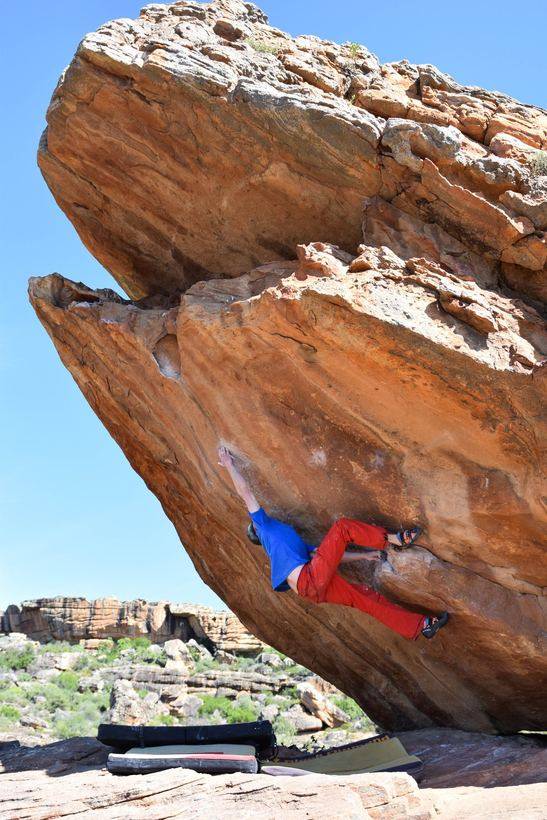
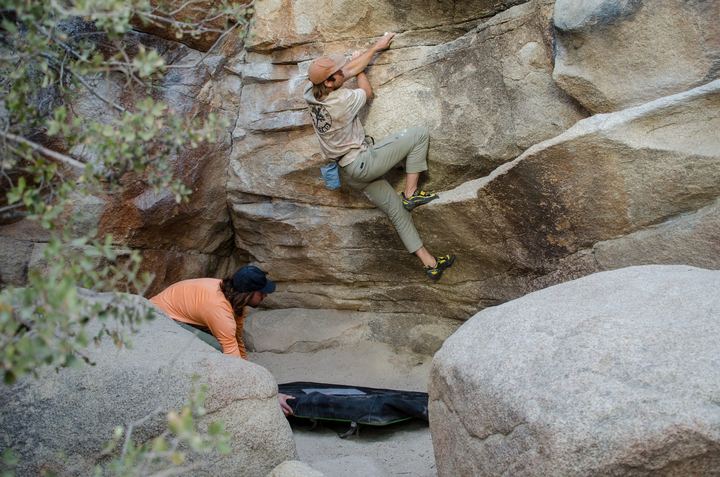
Everything you actually need for a Rocklands trip — the gear, the warm layers the winter demands, the skin care the sandstone demands, and the logistics first-timers forget.
01Climbing gear
- Climbing shoes — bring two pairs if you can; sandstone eats rubber, and a resole isn't quick out here.
- Chalk + chalk bag or bucket — you'll get through more than at home.
- Crash pad — or a booking to hire one locally. You don't have to fly with it. Pad hire & how many you need →
- Brush — a boar's-hair brush for cleaning chalk and rubber off the holds. Please don't use steel.
- Tape — finger and skin tape, more than you think.
- Guidebook or app — the printed Rocklands guide, or a 27 Crags / theCrag subscription for topos.
- Small first-aid kit — and any personal meds; the nearest pharmacy is Clanwilliam.
02Skin — the Rocklands special
The one thing everyone underestimates. The rock is grippy because it's coarse, and it shreds fingertips. Manage your skin or your trip gets shorter.
- Climbing salve — to recover skin overnight.
- Nail file or fine sandpaper — to smooth flappers and glassy tips.
- Nail clippers & small scissors
- Rest days built into the plan — skin needs them as much as muscles do.
03Layers for the cold
The season is winter for a reason — cold means friction. Mornings and evenings are genuinely cold; midday sun can be warm. Dress in layers.
- Warm mid-layers + a warm jacket — down or synthetic for belays, rests and camp.
- Beanie and light gloves — for cold starts.
- Rain shell — winter fronts do come through.
- Sun hat, sunglasses, high-SPF sunscreen — the sun is strong even when it's cold.
- Sturdy approach shoes — rocky, bushy walk-ins.
04At the crag, each day
- Daypack and plenty of water — there's nothing to buy at the boulders.
- Lunch and snacks — you're out all day.
- Sit pad and a flask — for the long belays between burns.
- Headlamp — early starts and late sends.
- Power bank and camera / phone — for the send.
- A rubbish bag — pack out everything; this is a wilderness.
05Trip logistics (the forgotten ones)
- CapeNature permit — buy online before you come; access is capped at 100/day. How to get one →
- Hire car — it's a self-drive trip; a 4x4 isn't needed but higher clearance is nice on the gravel.
- Cash — handy for the farmstall, camping and spots that are card-shy.
- Travel + climbing insurance
- SA plug adapter (Type M) and a warm sleeping bag if camping — Kliphuis and de Pakhuys camping is cold in winter.
- Offline maps — mobile signal is patchy up the pass.