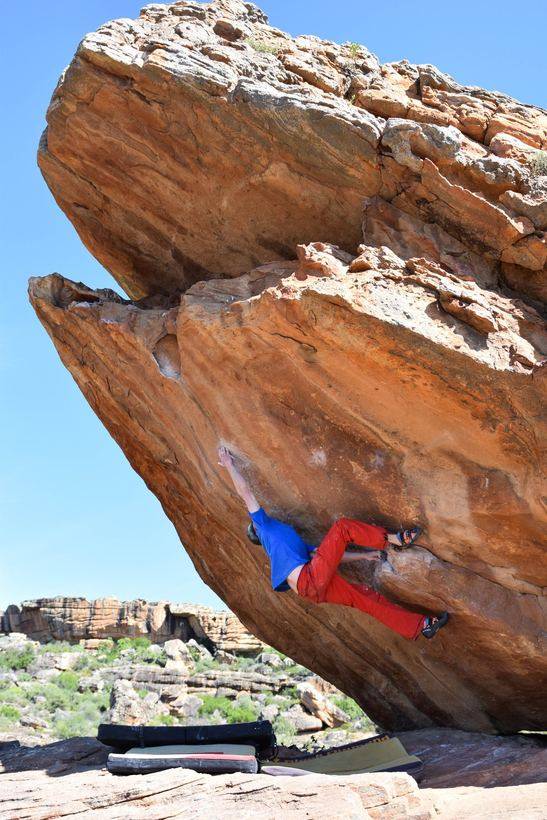
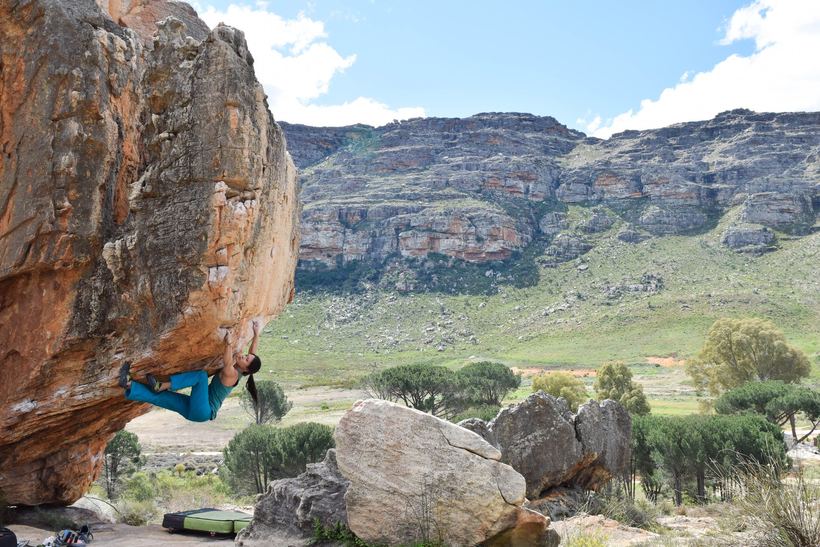
Come in winter. The Rocklands season runs April to September, and June to August is prime — the cold, dry Cederberg winter gives the friction the sandstone needs.
| Month | Conditions | Verdict |
|---|---|---|
| April | Cooling off; the season begins | Good |
| May | Cool and reliable | Good |
| June | Cold, dry, excellent friction | Prime |
| July | Coldest; best friction (occasional rain fronts) | Prime |
| August | Cold and prime — and the busiest | Prime |
| September | Warming up; the season winds down | Good |
| Oct – Mar | Hot, up to ~40°C; slick rock — shade & dawn/dusk only | Avoid |
When exactly should you come?
If you can pick your dates, aim for June to August — the coldest, driest window and the best friction of the year. April, May and September are still good and a little quieter, with the trade-off that early and late season can be warmer and more variable. The bouldering follows the cold: the colder and drier the air, the better the rock feels under your fingers.
What's the weather actually like?
Winter in the Cederberg is cold and dry. Expect genuinely cold mornings and evenings, with milder, sunny midday hours — dress in layers you can shed. Cold fronts sweep through now and then and can bring a few wet days, so pack a rain shell and keep your plans flexible. When a front clears, the crisp, cold air behind it is often the best climbing of the trip.
Can you climb in summer?
Not really. From November to March it's hot — up to around 40°C — and the sandstone turns slick and greasy; the friction that makes Rocklands special disappears. If you're here off-season you're limited to shaded boulders and the cool edges of the day, around dawn and dusk. Better to come in winter.
Is it busy in the peak?
Yes — June to August brings climbers from all over the world, and daily access is capped at 100 climbers a day. In the peak, buy your permit online ahead of time and book your bed well in advance rather than leaving either to chance.
Last updated August 2026 · conditions vary year to year with the weather