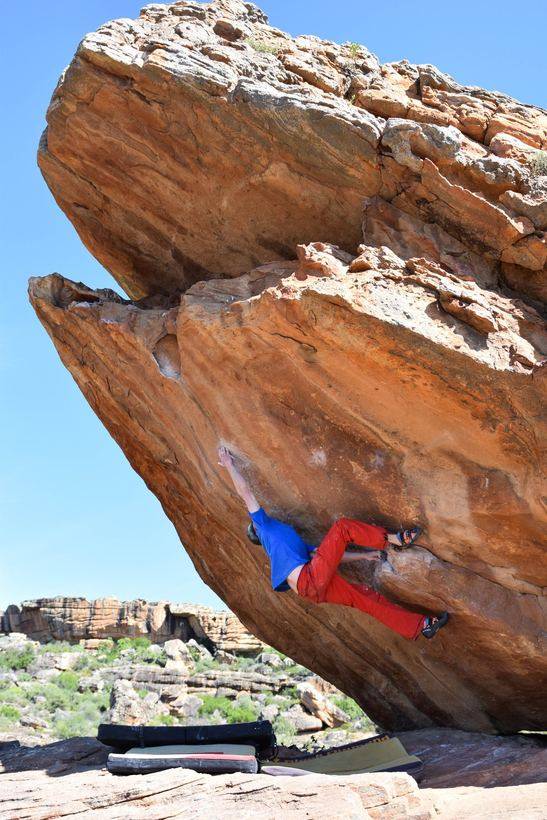
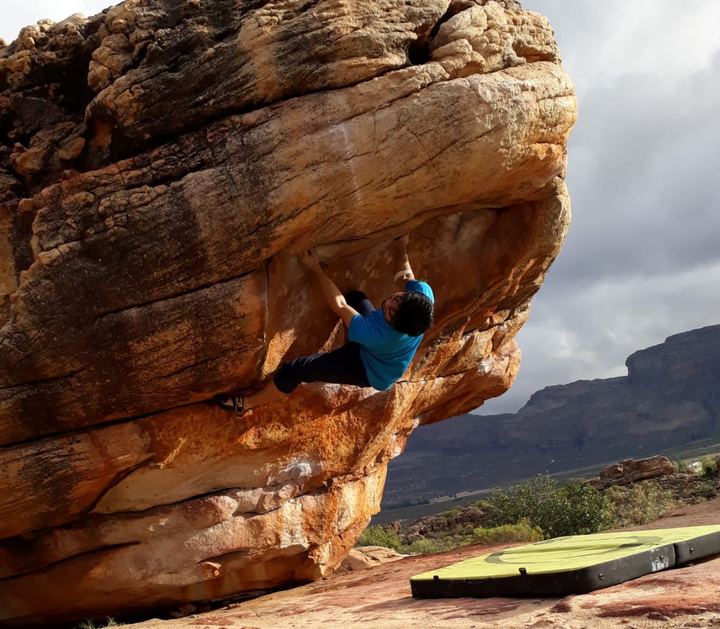
You don't have to fly with a pad. Pads can be hired in the valley — but there are only so many of them, so reserve yours when you book your bed.
Where can you hire a crash pad in Rocklands?
The basecamps on the R364 over the Pakhuis Pass are the place to ask. Traveller's Rest hires crash pads alongside beds and permits, which makes it the simplest option for most visitors. The other basecamps can sometimes point you at pads too, but we only list what we've been able to confirm — ask when you book rather than assuming a pad will be waiting.
Traveller's Rest
Hires crash pads, sells CapeNature permits, and sits on the doorstep of 8 Day Rain, Sassies and Danger Zone. Book the pad with the room.
crash-pad hire confirmed travellersrest.co.za →de Pakhuys
A permit office and a popular basecamp under The Plateau. We haven't confirmed pad hire here — ask them directly when you enquire about a bed.
ask when booking depakhuys.com →Kliphuis (CapeNature)
The CapeNature campsite, with the Campground boulders behind it and a permit office on site. We've seen no mention of pad hire here, so plan to bring one or hire it elsewhere.
no pad hire listed capenature.co.za →We're an independent guide, not a hire company and not a middleman — these links go straight to each operator. Rates change, so confirm the current price and availability with them. Hire a pad through your accommodation and it's usually waiting when you arrive.
Should you bring your own pad or hire one?
The honest answer depends on how long you're staying and what your airline charges for a bulky bag.
| Bring your own | Hire on arrival | |
|---|---|---|
| Best for | Long trips and full seasons | Two- to four-week trips, and anyone flying light |
| Baggage | Usually oversize or an extra bag — check your airline's rules and fees | Nothing extra to fly with |
| Cost shape | One-off flight cost, then free for the whole trip | A daily or weekly rate — ask the operator |
| Certainty | You know exactly what you're landing on | Depends on availability; reserve ahead for June–August |
| Hire car | Pads are big — a hatchback fills up fast with two or three | Same problem, so factor the boot space in either way |
Airline oversize rules and hire rates change constantly, so we don't quote numbers here — check both before you book. Whichever you choose, a pad in the boot and a pad on the ground are what decide which problems you can actually try.
How many pads does your crew need?
Rocklands landings are rarely flat. Expect rocky, sloping ground, undercut boulders and high topouts — the sort of place where a second and third pad turn a problem from reckless to reasonable.
| Your group | Pads that work |
|---|---|
| Climbing solo | 2 pads — one is not enough on uneven ground, and you have no spotter |
| A pair | 2–3 pads |
| Three or four | 3–4 pads, and take turns spotting |
| A bigger crew | One pad per climber, and someone who'll carry them |
A guide, not a rule — the honest test is whether you'd be happy falling from the top of the problem onto what's under you. Fewer pads doesn't ruin a trip; it just narrows what you can try.
What else does the sandstone demand?
Rocklands rock is grippy, sharp and unforgiving on skin and rubber. A few things are worth packing properly rather than picking up on the way.
- A boar's-hair brush — and never a metal one. Wire brushes strip the surface texture off sandstone permanently.
- Two pairs of shoes — the rock eats rubber, and there's no resoler up the pass.
- Serious skin care — file, salve, tape. Split tips end more Rocklands trips than bad weather does.
- More chalk than you think — cold, dry days and long sessions get through it.
- A sit pad and a flask — you'll spend a long time resting between burns in the cold.
- A proper daypack — pads carry the gear in, but water, food and layers still need somewhere to live.
Looking after the rock
Don't climb on wet sandstone. It soaks up water and gets much weaker — holds snap and problems are damaged for good. After rain, give the rock a proper chance to dry. Brush off your chalk and tick marks when you leave, keep to the paths between boulders, and pack out everything, including tape. This is a wilderness reserve and a working farm landscape, and access here depends on climbers behaving well.
Access, the daily cap and the rules themselves are CapeNature's, not ours — carry your permit and check the current conditions with them before you travel.
Last updated August 2026 · pad hire confirmed with Traveller's Rest only — rates and availability change, confirm with the operator